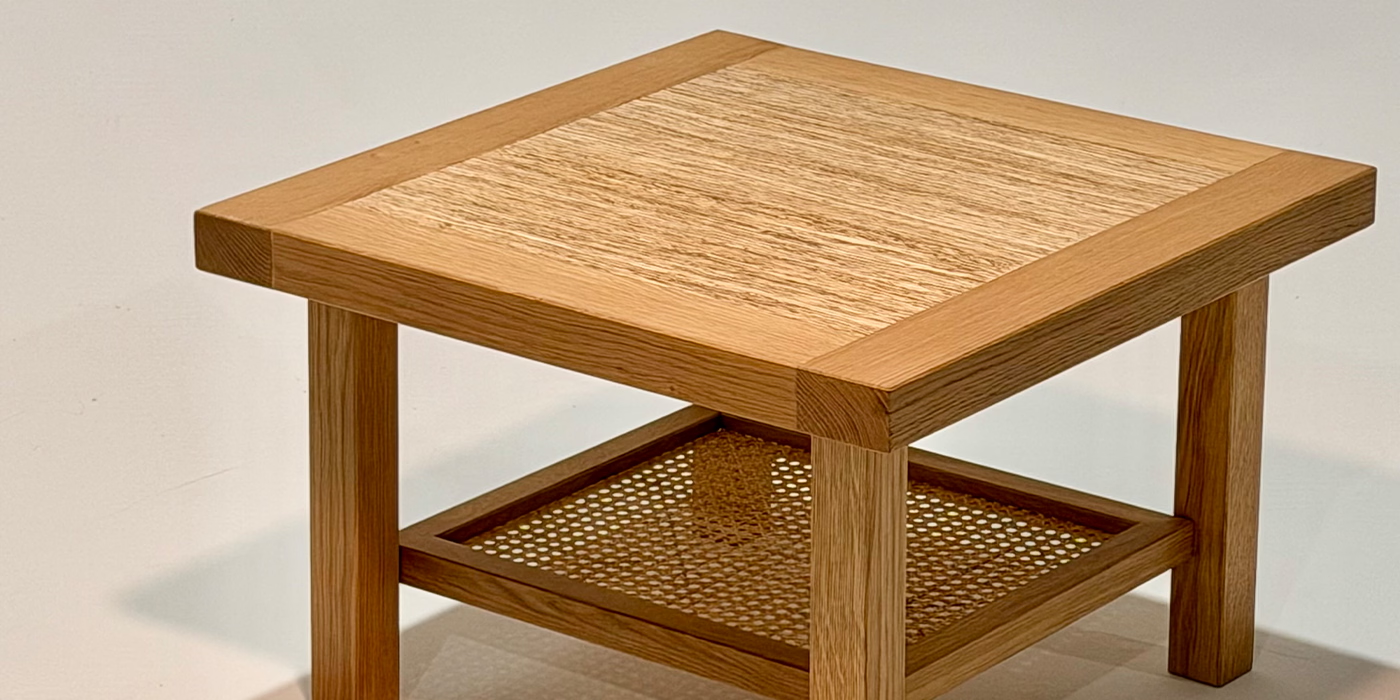
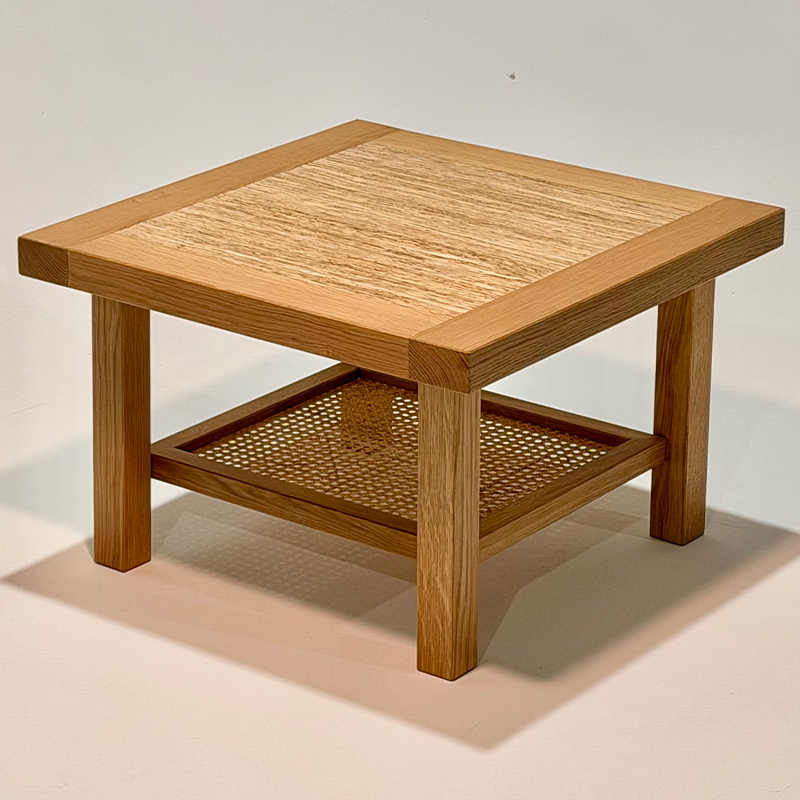
The HempWoven coffee table was conceived as an exploration of the balance between traditional craftsmanship and contemporary circular design. At the heart of the concept is the combination of classic oak wood and natural rattan webbing with Strumber Hemp 750 hemp lumber.
The piece draws inspiration from the Japandi aesthetic, combining minimalism, warmth and a connection to nature. Oak and rattan bring an organic, familiar feel, while the distinctive texture of Strumber Hemp 750 introduces a new material expression. Its unique fibre pattern creates a subtle yet striking contrast with the smooth oak surfaces and open-weave rattan.
Replacing some wooden components with hemp-based material can help reduce the furniture’s carbon footprint. As an annual crop, hemp absorbs significant amounts of CO₂ as it grows, allowing the HempWoven table to combine distinctive design with a more sustainable approach to material selection.

My first encounter with Strumber began with a sample beam measuring 70 × 9 × 9 cm. I processed the material using conventional woodworking machinery, including table saws, planers and thickness planers. It was my first hands-on experience with this innovative material.
Working with Strumber has its own specific characteristics and differs from working with oak. From a woodworker’s perspective, the material was a positive surprise: the dust and shavings produced during machining were much less bothersome and irritating than oak dust, while the texture and feel of the finished material were exceptionally pleasant to the touch.
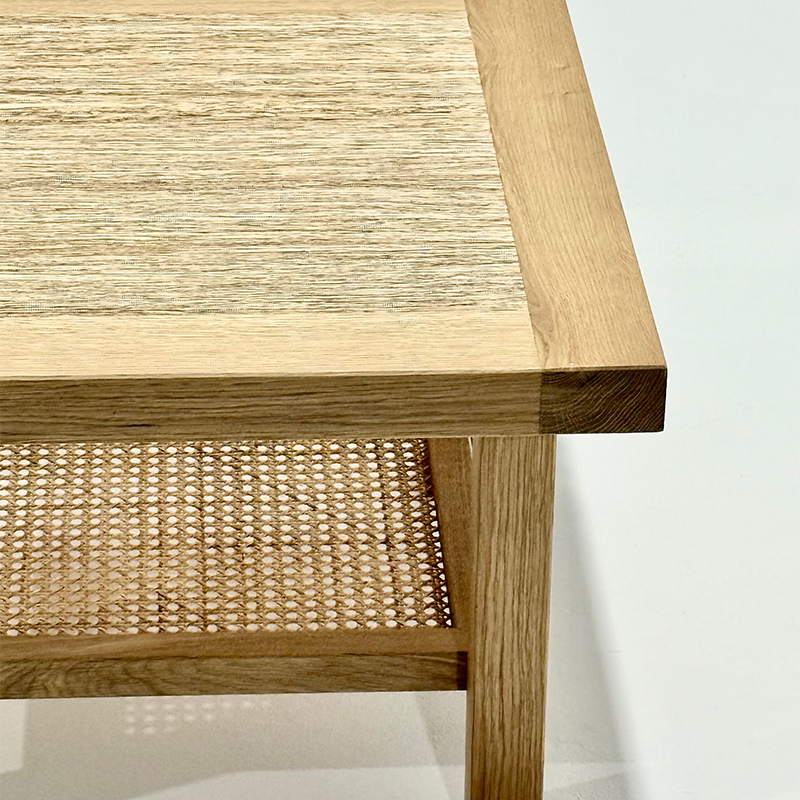
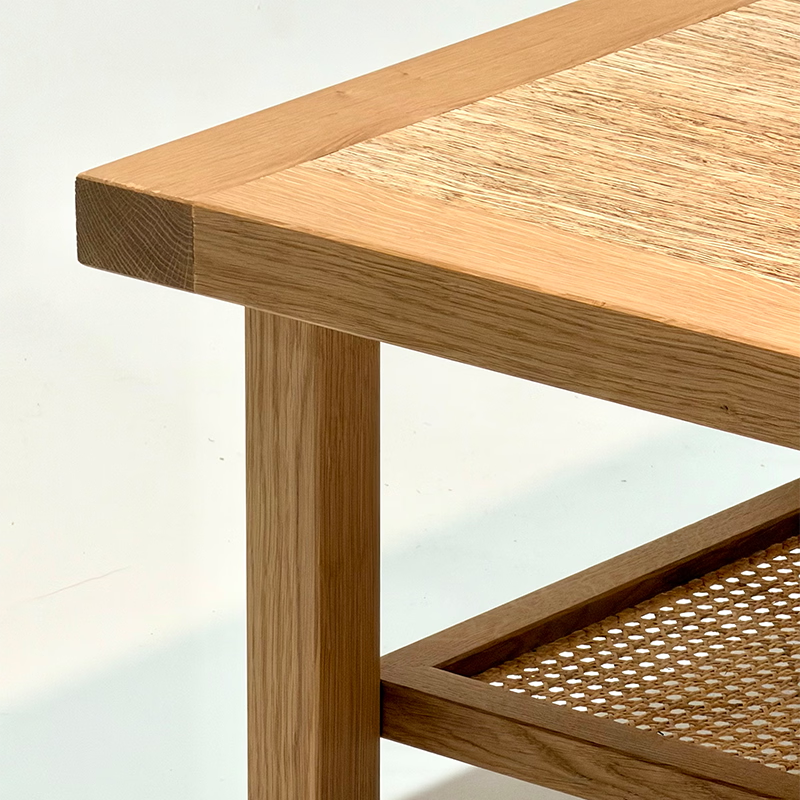
The main technical challenges arose during the finishing stage. Strumber is an absorbent material, which meant applying more lacquer, adding extra coats and adjusting the sequence of sandpaper grits during sanding. The process can take longer, but it makes it possible to achieve an impressively smooth finish, provided the material has a sufficiently high density, such as the 750 or 900 grade.
Given the different physical characteristics of hemp lumber, careful consideration of the table’s construction was also essential. Combining Strumber with a solid oak frame provided excellent stability and ensured that the table would function well in everyday use.
With the right construction and a suitable finishing process using highly durable lacquers, I can see this material – particularly in beam form – as a genuine alternative to traditional wood in applications such as window sills and even stair treads.